How Do Spirax Sarco Steam Traps Work?
Why Condensate Control Matters
Steam systems are built for efficiency, but without effective condensate removal they quickly become unstable, waste energy, and suffer long-term damage.
This is where Spirax Sarco steam traps play a critical role. These devices work automatically in the background, removing condensate, air, and non-condensable gases while keeping valuable live steam exactly where it belongs.
As steam flows through pipework and equipment, it releases heat to perform useful work. Once that heat is transferred, the steam condenses back into water.
If this condensate is allowed to build up, it reduces heat transfer, causes uneven temperatures, and can lead to water hammer and corrosion. Spirax Sarco steam traps prevent this by opening only when condensate is present and closing when steam reaches the trap.
How Different Steam Traps Work
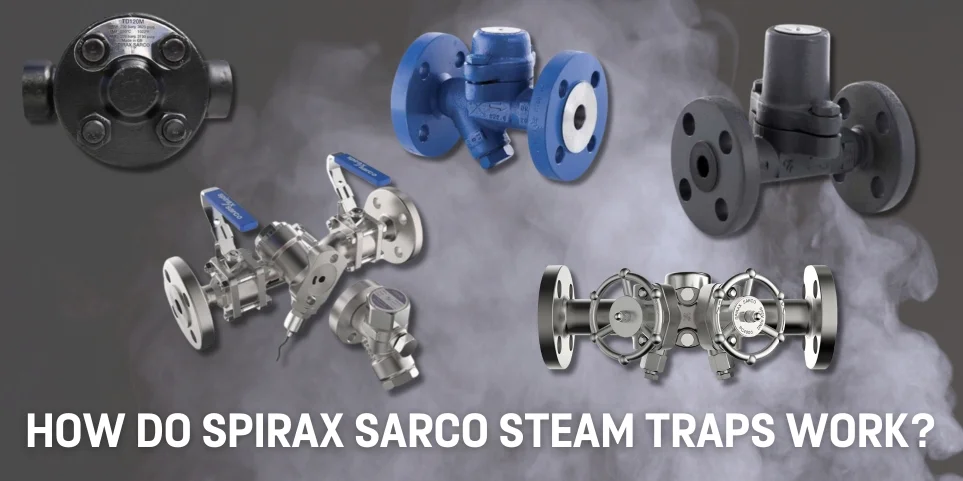
The way Spirax Sarco steam traps achieve this depends on the trap type. Mechanical steam traps use internal floats or buckets that rise and fall with condensate levels. When condensate enters the trap, the float rises and opens the valve to discharge it. As steam reaches the trap, the float drops and the valve closes, sealing the system.
Thermostatic steam traps respond to temperature. Condensate is cooler than steam, so the trap opens when cooler fluid is detected and closes as the temperature rises to steam level. This makes them ideal for applications where air and start-up gases need to be vented quickly.
Thermodynamic steam traps rely on the difference in velocity and pressure between steam and condensate. When condensate enters, the trap opens and discharges it. As hot steam follows, it creates a pressure change that forces the valve closed. This cycling action allows condensate to escape while retaining live steam.
Regardless of the design, every Spirax Sarco steam trap works toward the same goal: remove condensate at the right moment without wasting energy. This keeps heat exchangers operating efficiently, maintains stable temperatures, and prevents mechanical stress across the system.
Where Steam Traps Are Used
In real-world installations, Spirax Sarco steam traps are found on steam mains, drip legs, tracing lines, heat exchangers, jacketed vessels, autoclaves, and process equipment.
Each location has different demands, which is why having a full range of trap technologies is essential. Selecting the correct trap ensures reliable operation under varying pressures, loads, and temperatures.
The Cost of Poor Condensate Management
Poor condensate management is one of the biggest hidden costs in steam systems.
Failed or incorrectly specified traps allow live steam to escape or let condensate build up. Both scenarios increase fuel consumption, accelerate wear, and reduce overall plant efficiency. Spirax Sarco steam traps help eliminate these issues by maintaining consistent system performance over long operating periods.
In modern industrial environments, where energy costs and uptime are tightly controlled, Spirax Sarco steam traps are more than components.
They are performance tools that protect infrastructure, reduce waste, and keep steam systems operating at their full potential.