What Are Flow Regulator Valves and Why Do They Matter?
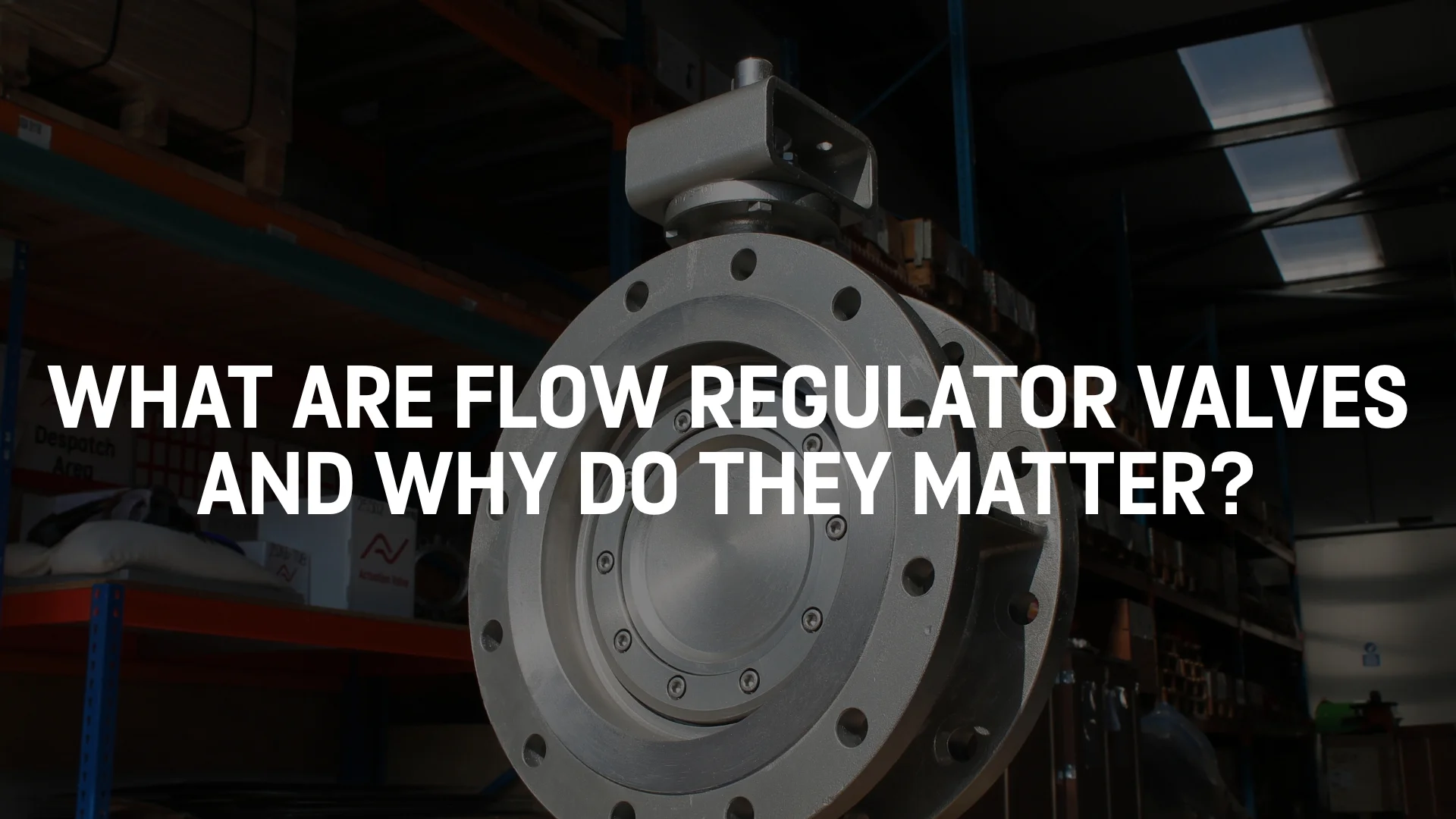
Flow regulator valves are essential components in fluid and gas systems, designed to maintain a consistent flow rate regardless of fluctuations in pressure. Whether used in water treatment, industrial processing, HVAC, or chemical dosing applications, flow regulator valves help maintain system efficiency, reduce energy usage, and protect equipment from damage caused by unregulated flow.
Unlike basic shut-off valves that simply open or close a pipeline, flow regulator valves actively control the rate of flow. This ensures systems operate within safe parameters, preventing over-pressurisation, underperformance, or inconsistent delivery. Selecting the right type of flow regulator valve depends on your application, media type, pressure rating, and required flow characteristics.
There are several types of valves that can be used as flow regulators, including ball valves, butterfly valves, gate valves, globe valves, and check valves. Each offers unique benefits and is suited to specific environments and operating conditions.
Ball valves are widely used for both isolation and flow control. With a simple quarter-turn mechanism and a spherical closure element, ball valves offer rapid shut-off and can also provide limited throttling when partially open. While not traditionally used for precise flow regulation, modern designs with V-port configurations offer enhanced control in certain flow applications. Their durability and low maintenance make them a popular option for general-purpose systems.
Explore our Ball Valves
Butterfly valves serve as efficient flow control valves in medium to high-volume applications. The rotating disc within the valve body allows for quick adjustment, making butterfly valves ideal for throttling and modulating flow. They are lightweight, cost-effective, and available in wafer, lug, and double-flanged designs. Butterfly flow regulator valves are commonly found in HVAC systems, fire protection, and water distribution due to their ease of use and ability to handle large diameters.
Explore our Butterfly Valves
Gate valves are primarily used for on/off isolation but are occasionally used in flow regulation applications. They operate by raising or lowering a gate to control flow. While they are not suitable for precise flow control due to potential vibration and wear when partially open, they can be effective in systems that require infrequent adjustment. Gate valves are better suited to applications involving low-resistance full flow or complete shut-off.
Explore our Gate Valves
Globe valves are specifically designed for regulating flow and are among the most accurate types of flow control valves. They feature a movable plug and stationary seat within a spherical body, which allows for precise throttling. Globe flow regulator valves are used in high-pressure systems, steam lines, and critical flow applications where accuracy is essential. Their design allows for easy maintenance and efficient handling of a wide range of fluids and gases.
Explore our Globe Valves
Although not flow regulators in the traditional sense, check valves play an important role in flow control by preventing reverse flow. This ensures that the system maintains forward flow direction and protects pumps, compressors, and other equipment from damage. Some designs, such as spring-loaded or swing check valves, also allow for pressure drop management, which can influence flow rate indirectly.
Explore our Check Valves
Why Flow Regulator Valves Are Essential in Modern Systems
Using the correct flow regulator valve provides long-term benefits in terms of energy efficiency, system reliability, and reduced maintenance costs. Industries such as pharmaceutical manufacturing, chemical processing, food and beverage production, and water utilities all depend on consistent and predictable flow.
Proper valve selection involves considering the media type, operating pressure, flow rate requirements, and environmental conditions. Regular maintenance, particularly in systems carrying corrosive or dirty fluids, ensures optimal performance and prevents blockages or valve wear.
Flow regulator valves are not one-size-fits-all. Each valve type brings unique advantages to specific systems, and knowing when and where to use them is crucial to overall process control.
Explore our Check Valves
Discover the Right Flow Regulator Valve for Your System
To learn more about how these valves can benefit your operation or to browse our full range, visit our dedicated Flow Regulator Valves page.