What Are Linear Valves and Why Are They Crucial for Industrial Flow Control?
What Are Linear Valves and Why Are They Crucial for Industrial Flow Control?
When it comes to precise and dependable fluid regulation, linear valves are the go-to choice across multiple industries. These valves control the flow of liquids or gases by moving a disc, plug, or diaphragm in a straight line—hence the term linear. Whether you're operating in the chemical sector, power generation, pharmaceuticals, or water treatment, the reliability and precision of linear valves make them a foundational component of any flow control system.
But not all linear valves are the same. Different types—like gate valves, globe valves, diaphragm valves, and plug valves—offer unique advantages depending on your application's demands.
Gate Valves: Straight-Through Flow with Minimal Pressure Drop
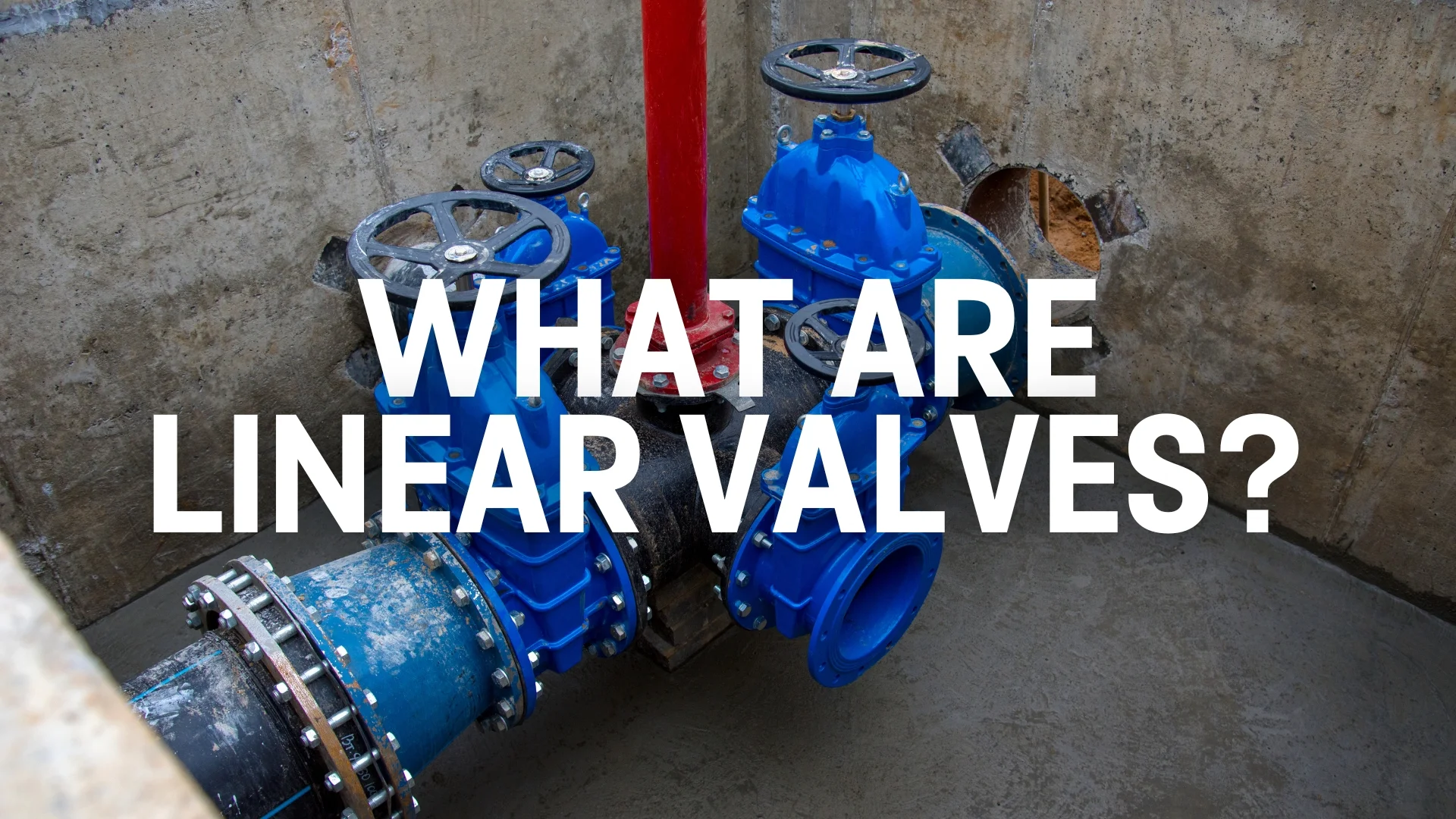
Gate valves are one of the most commonly used types of linear valves. They work by lifting a flat or wedge-shaped gate vertically to open or close the valve. Ideal for on/off service, gate valves provide a full, unobstructed bore when open, resulting in very low pressure drop. However, they are not suitable for throttling purposes. Attempting to regulate flow with a partially open gate valve can lead to vibration, seat damage, and reduced lifespan.
Applications for gate valves include water pipelines, oil refineries, and high-pressure steam systems, where the valve is either fully open or fully shut for efficient isolation.
Globe Valves: Precision Control in Flow Regulation
Globe valves are designed specifically for modulating and regulating flow. Their spherical body shape houses a movable plug that seats against a stationary ring, allowing for fine control over flow rates. These linear valves are well-suited for applications requiring accurate flow adjustment, such as cooling water systems, fuel oil systems, and chemical feed systems.
While globe valves may have a slightly higher pressure drop compared to gate valves, their exceptional throttling ability makes them the preferred choice where flow control is more important than free flow.
Diaphragm Valves: Ideal for Hygienic and Corrosive Applications
Diaphragm valves operate using a flexible diaphragm that moves up and down to control fluid flow. These linear valves offer leak-tight performance and are particularly valuable in systems where hygiene, cleanliness, and chemical compatibility are critical. With no moving parts in contact with the process media, diaphragm valves prevent contamination and are easy to clean—making them ideal for pharmaceutical, food & beverage, and biotech industries.
Their ability to handle corrosive or particulate-filled media also makes diaphragm valves suitable for chemical dosing, slurry handling, and water treatment systems.
Plug Valves: Durable and Efficient Shut-Off Performance
While often classified as rotary, certain plug valves operate in a linear motion and offer excellent on/off control. These valves feature a cylindrical or tapered plug that moves into position to block or allow flow. Known for their simple design and rugged construction, plug valves are ideal for handling slurries, viscous fluids, and corrosive chemicals in oil & gas, wastewater, and chemical processing environments.
Linear motion plug valves provide a bubble-tight seal and are especially useful in applications requiring reliable isolation with low maintenance.
Needle Valves: Precision Control for Low Flow Applications
Needle valves are a type of linear valve designed for precise, fine-tuned flow control in low-pressure or low-flow systems. They feature a slender, tapered stem (or “needle”) that moves linearly into a matching seat, allowing operators to make micro-adjustments to flow with a high degree of accuracy. This makes needle valves particularly valuable in instrumentation lines, sampling systems, and laboratory setups where exact flow rates are critical.
Their compact design and leak-tight sealing capabilities make them a go-to solution for controlling gases or liquids in industries like oil & gas, research, power generation, and chemical dosing. Needle valves are typically used where gradual, controlled shut-off is needed rather than fast on/off service. Their precision and reliability make them an essential tool in any system that depends on accuracy and stability.
Why Linear Valves Matter in Modern Industry
The importance of linear valves lies in their ability to offer dependable, precise control over a wide variety of media types and operating conditions. Whether it's the full-bore isolation of a gate valve, the fine-tuned flow regulation of a globe valve, the hygienic performance of a diaphragm valve, or the rugged reliability of a plug valve, linear valves play a key role in maintaining operational efficiency, safety, and product quality.
Choosing the right linear valve depends on your system’s pressure, temperature, media type, and flow requirements. By understanding the strengths of each type, you can ensure long-term performance and reduce downtime in your facility.
Frequently Asked Questions About Linear Valves
1. What are linear valves used for?
Linear valves are used for both on/off and flow control applications in various industries, offering precise regulation by moving the closure element in a straight line.
2. What’s the difference between gate and globe valves?
Gate valves are ideal for full open/close service with minimal pressure drop, while globe valves are better suited for regulating flow thanks to their throttling capabilities.
3. Can diaphragm valves handle aggressive chemicals?
Yes, diaphragm valves are excellent for handling aggressive, corrosive, or slurry media due to their non-metallic diaphragms and clean design.
4. Are plug valves considered linear valves?
While most plug valves are rotary, some types with rising stems or linear actuators operate in a linear fashion and are used for similar shut-off purposes.
5. Which industries commonly use linear valves?
Industries include chemical processing, oil & gas, pharmaceuticals, food and beverage, water treatment, and power generation.
6. Do linear valves support automation?
Yes, linear valves can be fitted with electric or pneumatic actuators for remote and automated operation.
7. What materials are linear valves made from?
Common materials include stainless steel, brass, bronze, PVC, and lined alloys, depending on media compatibility.
8. How do I choose the right linear valve?
Consider flow rate, pressure, media, temperature, and control requirements. Consulting with a valve specialist is recommended.
9. Are linear valves good for throttling?
Yes, particularly globe and diaphragm valves are excellent for throttling and precise flow regulation.
10. What is the main advantage of a gate valve?
Gate valves offer minimal flow resistance and are ideal for applications where the valve stays fully open or fully closed.
11. Do linear valves require much maintenance?
They are generally low maintenance, especially when made from corrosion-resistant materials and used in appropriate applications.
12. Can I use linear valves in high-pressure systems?
Yes, many linear valves are rated for high-pressure service, depending on the design and construction materials.
Need help choosing the right linear valve?
We offer expert support and a wide range of options including gate, globe, diaphragm, and plug valves.
Get in touch today and find the perfect fit for your application.