Everything You Need to Know About Proportional Valves
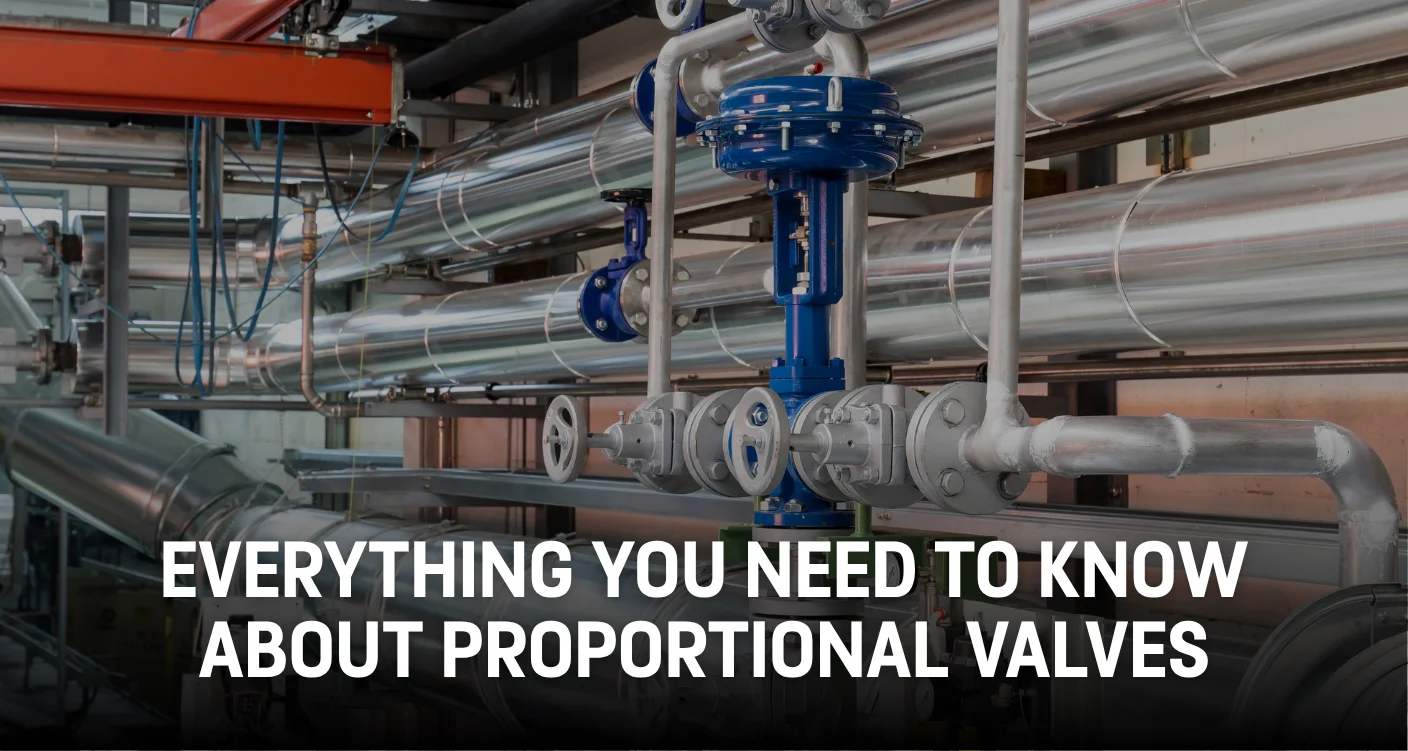
Everything You Need to Know About Proportional Valves
Key Points:
-
Understand what proportional valves are and how they work
-
Learn the industries and applications that use them
-
Explore the benefits of using proportional valves in precision control systems
-
Get answers to common FAQs at the bottom of the page
What Are Proportional Valves?
Proportional valves are advanced control components designed to manage the flow or pressure of fluids and gases with precision. Unlike traditional on/off solenoid valves, proportional valves provide variable control, allowing a range of outputs between fully open and fully closed. This feature makes them ideal for systems where exact control is essential.
In these valves, an electrical signal is converted into a mechanical movement to adjust the opening of the valve. The greater the input signal, the larger the valve opening, and vice versa. This proportional response ensures smoother transitions and finer adjustments in automation and process control systems.
How Do Proportional Valves Work?
At the heart of a proportional valve is a solenoid actuator that responds to varying electrical signals, typically in the form of current or voltage. The solenoid’s magnetic field controls a plunger or spool that shifts in proportion to the signal received. This gradual movement allows the flow or pressure of the medium to be modulated instead of simply turned on or off.
In essence, proportional valves bridge the gap between binary valve states and precise regulation. This characteristic makes them critical in systems that require consistent and repeatable performance under changing conditions.
Where Are Proportional Valves Used?
Proportional valves are widely used in numerous industrial sectors where accuracy, repeatability, and control are required. Key industries include:
-
Medical devices – for precise gas and fluid flow
-
Automation and robotics – for smooth actuator motion
-
Pneumatics and hydraulics – to control pressure and flow in real time
-
Food and beverage – to maintain consistent flow in dosing or mixing
-
Aerospace and automotive – for fine control of fuel, air, or lubrication systems
Their ability to adjust flow continuously based on demand makes proportional valves indispensable for dynamic systems.
Benefits of Proportional Valves
-
Accurate Flow Control
Proportional valves offer real-time adjustment, allowing for greater precision than on/off valves in dynamic processes.
-
Energy Efficiency
Systems using proportional valves can reduce energy waste by maintaining only the required flow or pressure.
-
Reduced Wear and Tear
With gradual opening and closing, these valves prevent sudden pressure spikes, increasing the lifespan of other system components.
-
Versatility Across Media
Proportional valves can be used with air, gas, water, or oil, depending on the materials and seals used in construction.
-
Improved Process Stability
Their continuous control helps maintain stable system performance even under changing loads or conditions.
-
Integrated Control Options
Many modern proportional valves come with built-in electronics for digital feedback and diagnostics.
Why Proportional Valves Matter
As industries evolve toward automation and smart systems, proportional valves play a vital role in enhancing operational control. Their contribution to safety, efficiency, and accuracy makes them a valuable investment across high-demand environments. Whether in medical dosing or factory automation, these valves help deliver smooth, predictable performance.
Frequently Asked Questions (FAQs)
What is a proportional valve used for?
A proportional valve is used to control flow or pressure in a system with precision, responding proportionally to an electrical signal.
How is a proportional valve different from a solenoid valve?
While solenoid valves are on/off devices, proportional valves offer variable output, enabling finer control over flow or pressure.
Can proportional valves handle both liquids and gases?
Yes, depending on the model and material, proportional valves can control both liquids and gases.
Are proportional valves expensive?
They tend to be more expensive than standard solenoid valves due to their advanced control capabilities and electronic features.
Do proportional valves require a controller?
Yes, they typically need a control signal from a PLC or dedicated controller to operate correctly.
What types of signals do proportional valves accept?
Common signals include 0–10V, 4–20mA, or PWM (pulse width modulation).
How long do proportional valves last?
With proper maintenance, they have a long service life, especially in clean, controlled environments.
Can proportional valves be used in hazardous areas?
Some models are certified for use in hazardous or explosive environments. Always check specifications.
What industries benefit most from proportional valves?
Industries like medical, food and beverage, packaging, and automation gain significant benefits from using proportional valves.
Do proportional valves require maintenance?
Minimal maintenance is needed, but periodic checks ensure optimal performance and longevity.
Can I retrofit proportional valves into an existing system?
Yes, many models are designed for easy integration or replacement of on/off valves in existing systems.
Are proportional valves suitable for high-pressure applications?
Yes, as long as the valve is rated for the pressure range in question. Always verify pressure specs before use.