When Is a Pilot Operated Solenoid Valve Required?
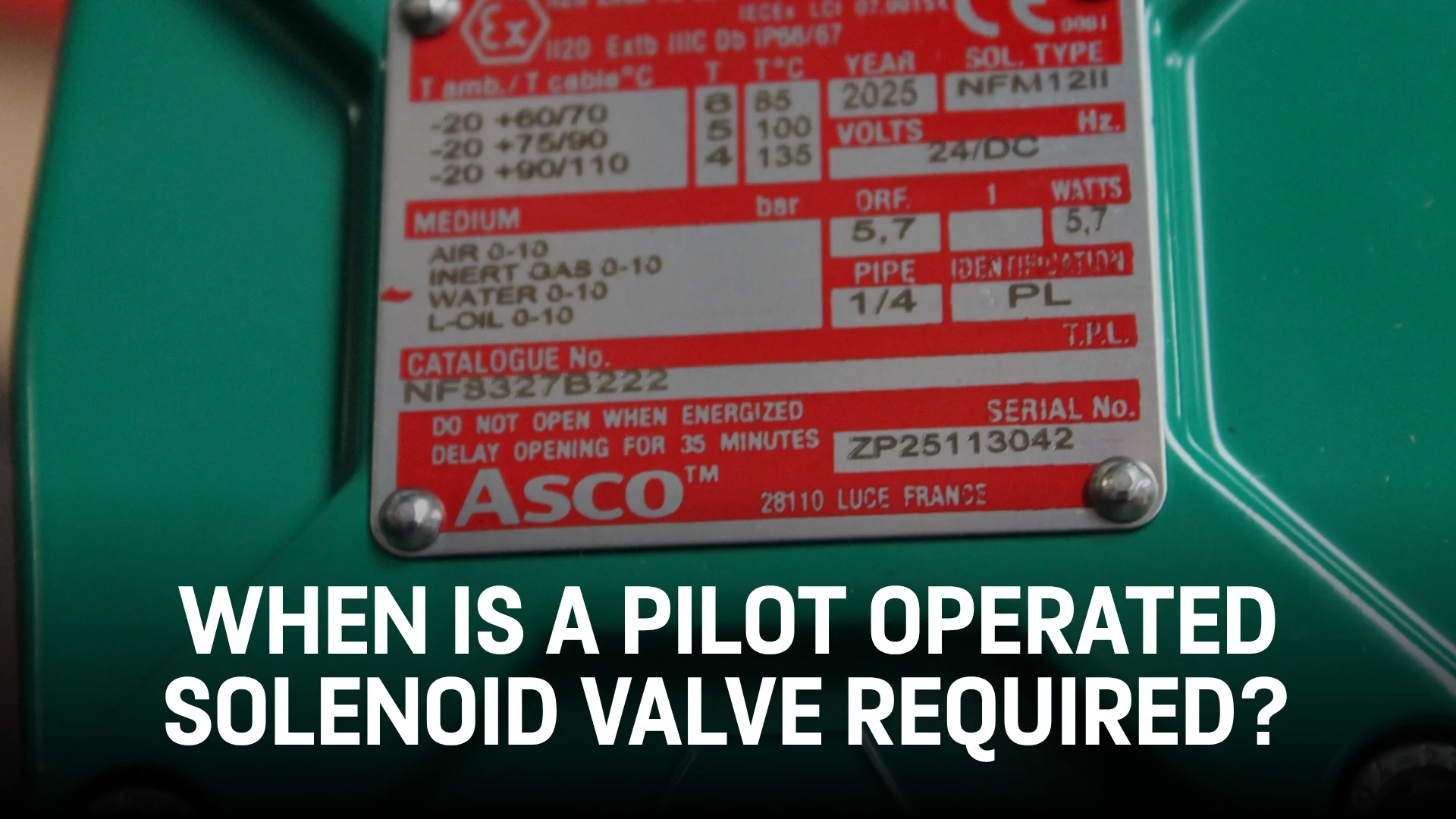
Choosing the right type of solenoid valve is critical for any fluid or pneumatic control system. Among the two main designs—direct acting and pilot operated—the latter is preferred in applications that demand high flow rates, larger pipe sizes, or higher pressures. But exactly when is a pilot operated solenoid valve required?
This guide explains how pilot operated solenoid valves work, when they are the right choice, and the advantages they offer across industrial and commercial systems.
What Is a Pilot Operated Solenoid Valve?
A pilot operated solenoid valve uses system pressure to help open and close the main valve. Instead of relying solely on the magnetic coil to move the plunger, the coil controls a small pilot orifice. The resulting pressure differential across a diaphragm or piston then assists in opening or closing the main valve passage.
This means the valve doesn’t require a large coil to operate, even at high pressures. The design delivers smooth operation, lower energy consumption, and a longer service life—especially in continuous or high-duty applications.
When Is a Pilot Operated Solenoid Valve Required?
Knowing when a pilot operated solenoid valve is required depends on the system’s pressure conditions, flow rate, and overall operating environment.
1. High Flow or Large Pipe Diameters
If your system controls a significant flow of liquid or gas, a direct acting solenoid valve may not generate enough force to open the main orifice. Pilot operated valves use line pressure to assist in actuation, making them ideal for larger bore sizes and higher flow requirements.
2. Higher System Pressures
In systems operating above 5 bar (72 psi) or where pressures fluctuate regularly, a pilot operated solenoid valve is often the better choice. The internal design distributes force more evenly, ensuring reliable opening and closing without coil overheating or wear.
3. Consistent Pressure Differential
These valves require a minimum pressure difference between the inlet and outlet—typically around 0.3 bar—to function correctly. They are ideal for closed-loop systems where this differential is maintained, such as pressurised air, oil, or water lines.
4. Continuous or Frequent Cycling Applications
If a valve is opening and closing repeatedly, a pilot operated design reduces coil strain and extends operational lifespan. This is why they are common in automatic process control systems that run continuously.
5. Energy Efficiency Demands
Pilot operated solenoid valves require less electrical power because the coil isn’t responsible for handling the entire fluid pressure. This lower energy requirement makes them a great fit for energy-conscious facilities or systems running multiple valves simultaneously.
6. Temperature-Sensitive or Delicate Applications
Because pilot operated solenoid valves generate less heat, they can be used in temperature-sensitive applications such as cooling systems, gas control, or temperature-regulated process lines.
Benefits of Using a Pilot Operated Solenoid Valve
Understanding when a pilot operated solenoid valve is required also means knowing why it’s beneficial in specific environments.
-
High Flow Efficiency: Handles larger volumes with smaller actuators.
-
Lower Power Consumption: Requires less electrical energy to operate.
-
Longer Lifespan: Reduced wear and heat stress increase durability.
-
Compact Coil Design: Smaller coils handle higher pressures safely.
-
Reliable Control: Smooth actuation for systems under constant pressure.
Pilot operated valves are a common choice in water treatment systems, industrial air compression, HVAC, process automation, and hydraulic circuits—where precise, reliable, and energy-efficient control is critical.
When Not to Use a Pilot Operated Solenoid Valve
Although effective, there are scenarios where these valves aren’t suitable. Pilot operated solenoid valves depend on a minimum differential pressure, so they may not perform correctly in:
-
Gravity-fed or vacuum systems where there is no inlet pressure.
-
Low-pressure applications below the manufacturer’s minimum differential.
-
Systems requiring zero-pressure operation, where a direct acting solenoid valve would be more appropriate.
In these cases, a direct acting design ensures consistent functionality even at very low pressures.
FAQs
1. What is the difference between a direct acting and a pilot operated solenoid valve?
A direct acting valve relies solely on magnetic force to open or close the orifice, while a pilot operated valve uses system pressure to assist the process, allowing for higher flow capacity and lower energy usage.
2. Why is a pilot operated solenoid valve more efficient?
Because it uses pressure assistance, the coil requires less electrical power. This reduces operating costs and heat generation, improving overall system efficiency.
3. Can pilot operated solenoid valves handle gases and liquids?
Yes. They can control both gases and liquids, provided the media and materials are compatible with the valve’s construction and operating temperature range.
4. What pressure range suits a pilot operated solenoid valve best?
These valves are ideal for systems operating between 5 and 50 bar, where stable differential pressure exists between inlet and outlet.
5. How do I know if my system needs a pilot operated valve?
If your application involves high flow, high pressure, or consistent operating cycles, it’s likely that a pilot operated valve will provide more reliable and cost-effective performance than a direct acting type.